Insulation of the Pedestal Area in Wind Turbines
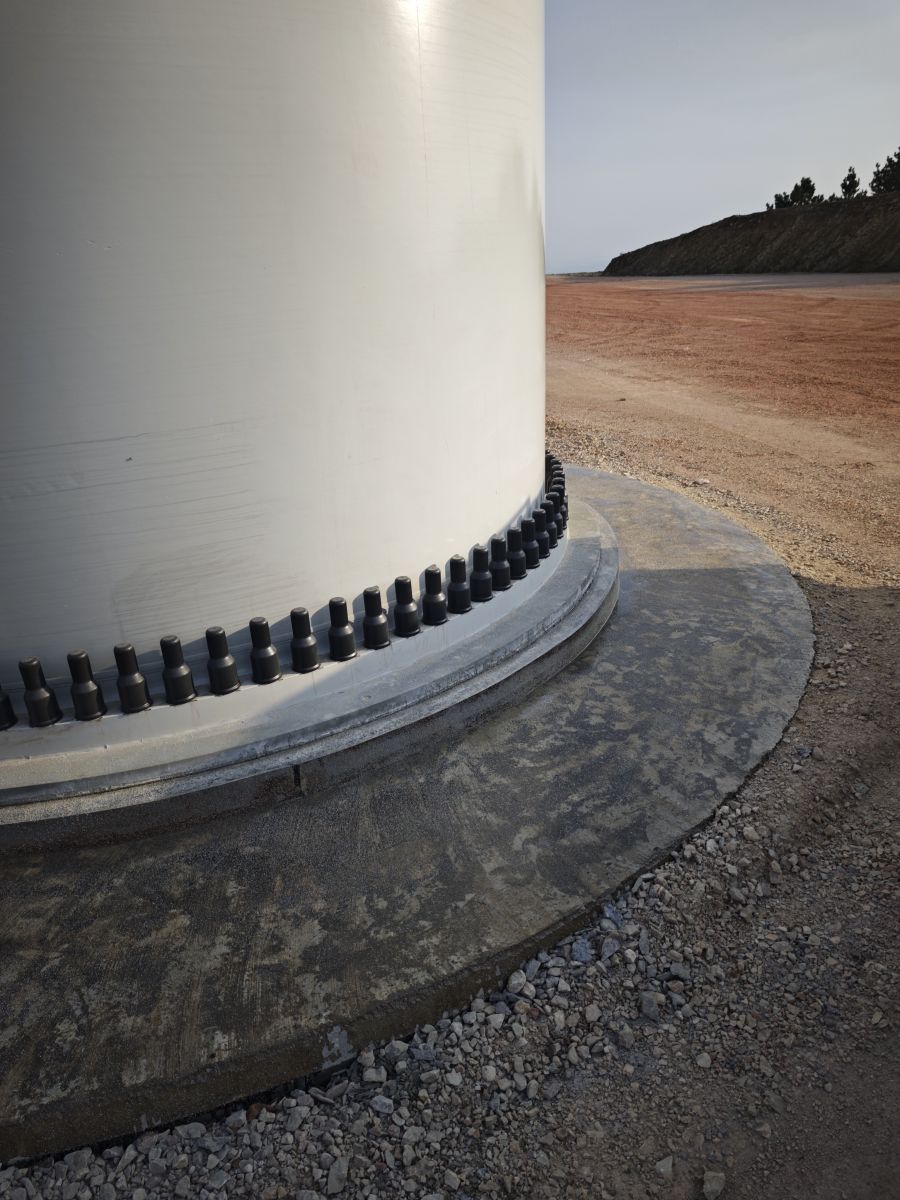
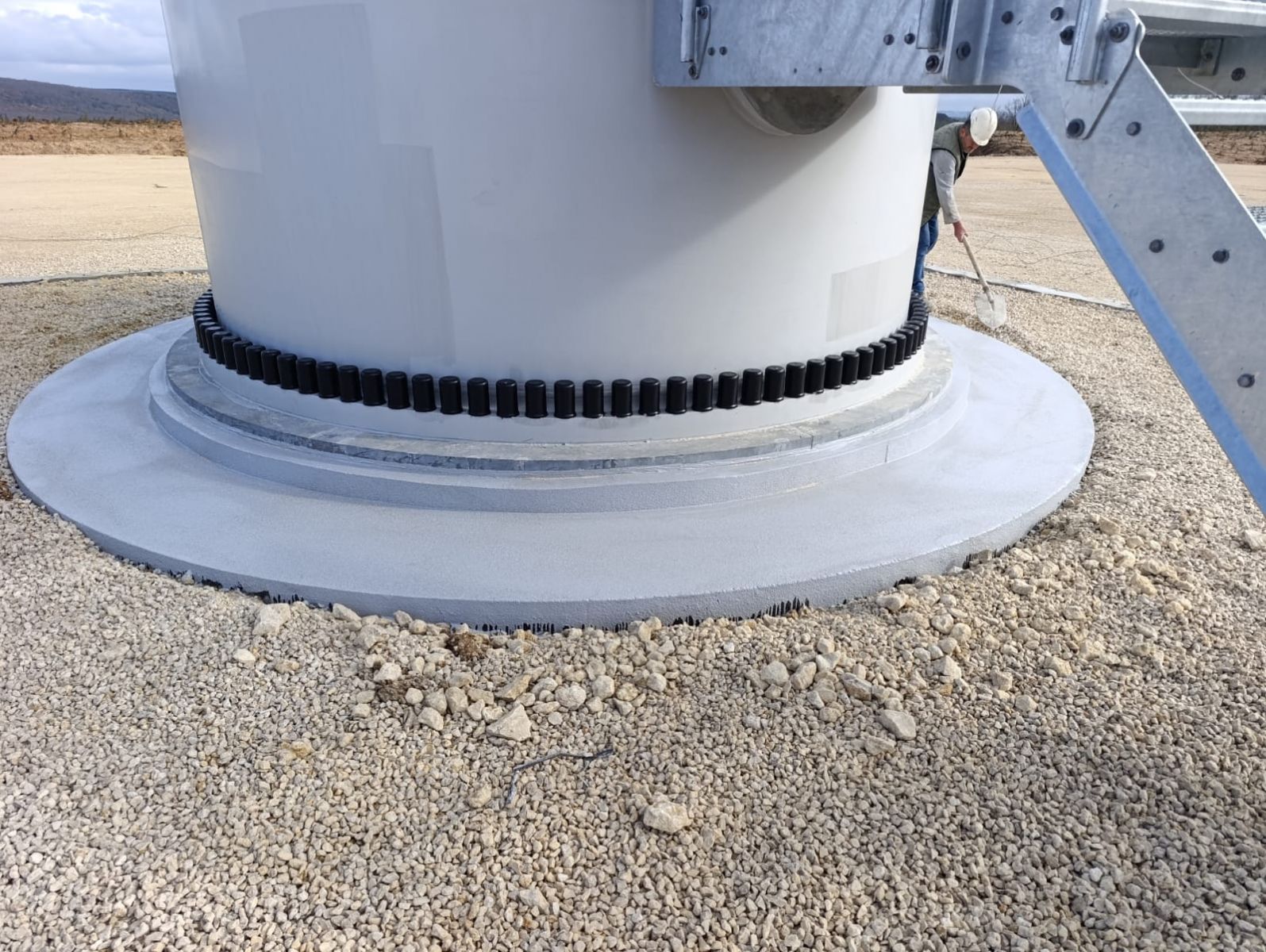
The pedestal region of wind turbines is a critical transition point that transfers dynamic wind loads from the steel tower to the reinforced concrete foundation, and it is also where the structure has the harshest contact with the external environment. The primary purpose of insulation in this region is to protect the structural grout under the tower flange, the reinforced concrete foundation, and the anchor bolts from water ingress, freeze-thaw cycles, and chemicals that may leak from the turbine.
For the application to be long-lasting, the steps must be carried out in a specific sequence and with precision.
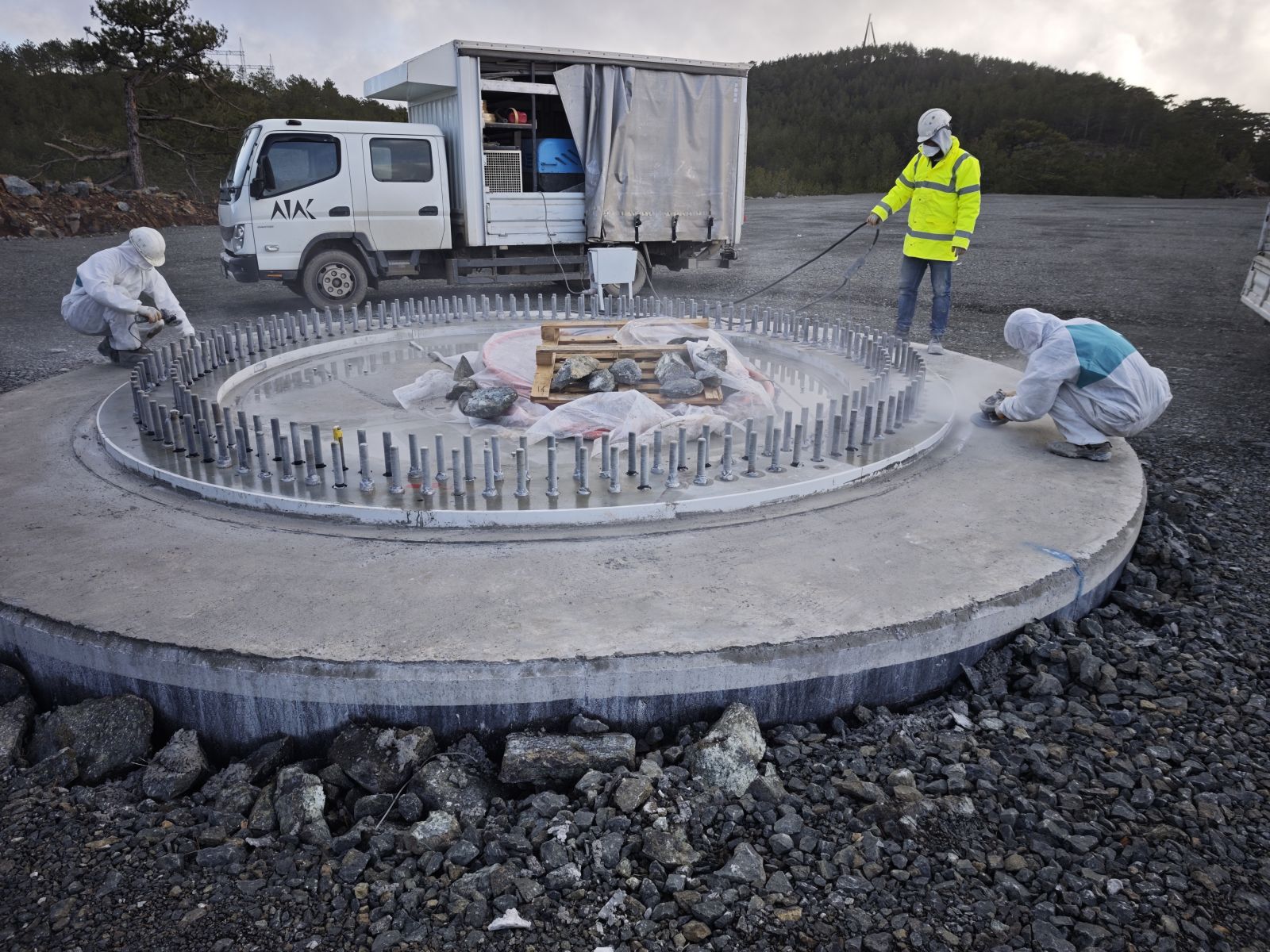
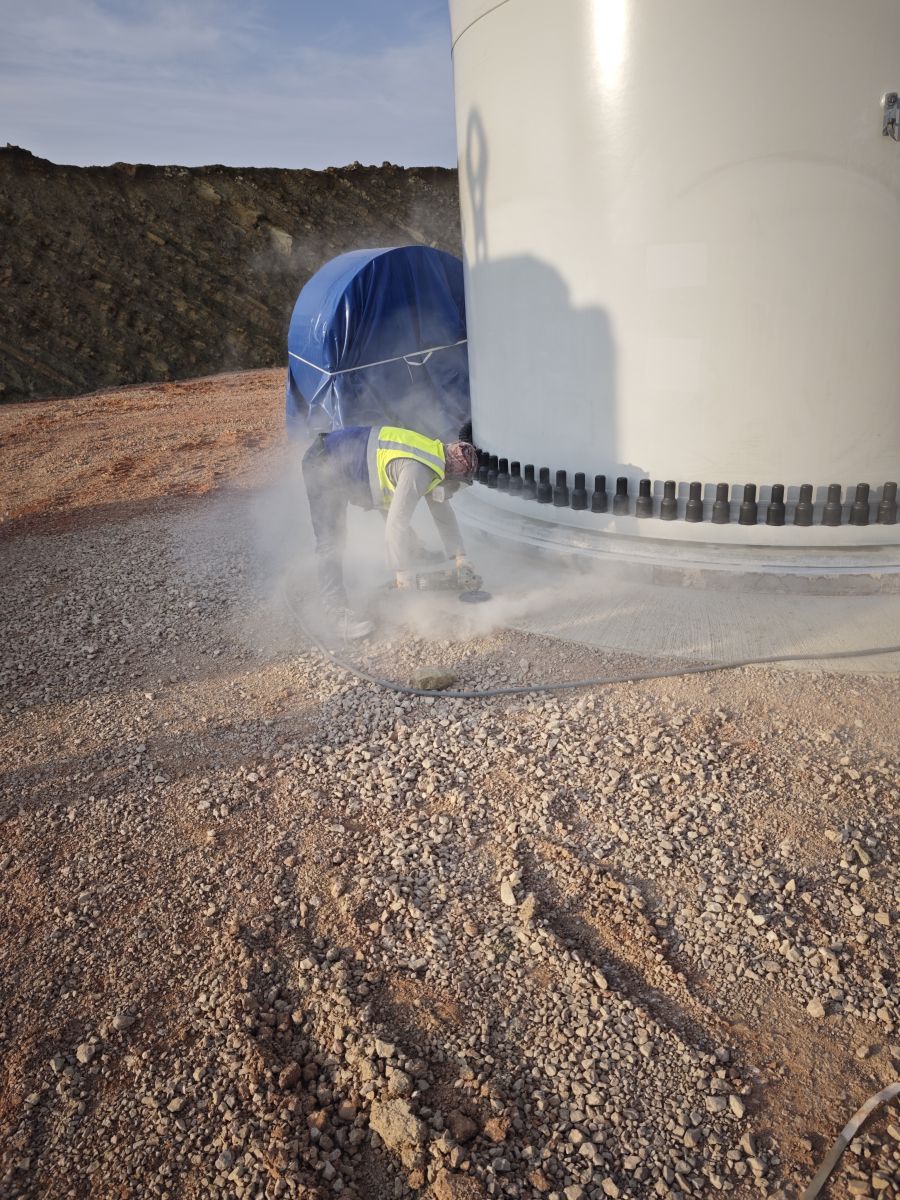
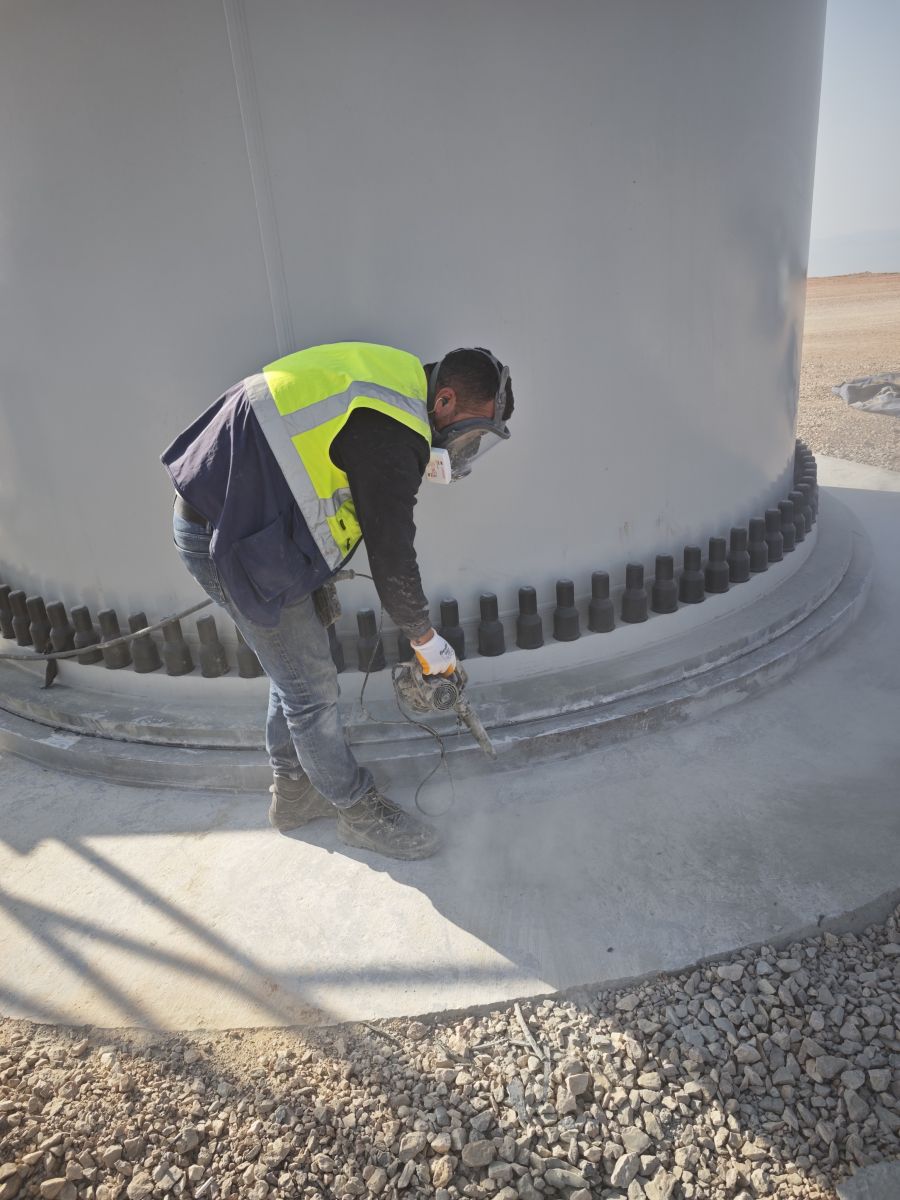
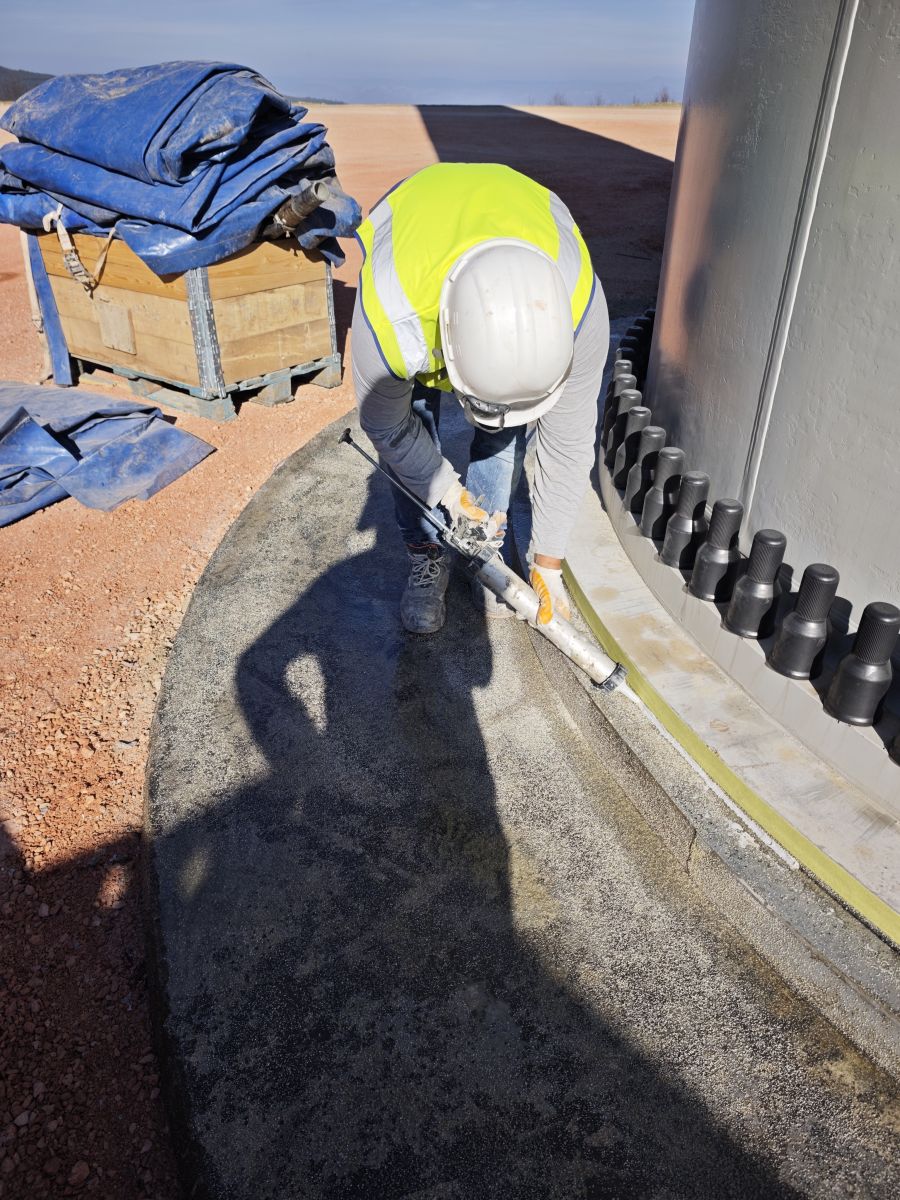
1. Surface Preparation and Moisture Control: Mechanical cleaning and roughening. Cement laitance, rust, oil, and dust on the concrete and steel surfaces are completely removed using mechanical methods. Measurements are taken to ensure that the surface moisture level is generally below 6%.
-
Reasoning: Epoxy systems require an open-pored, clean, and dry surface to achieve high adherence (bonding). A laitance layer or high moisture causes the epoxy to blister and peel off the surface (delamination).
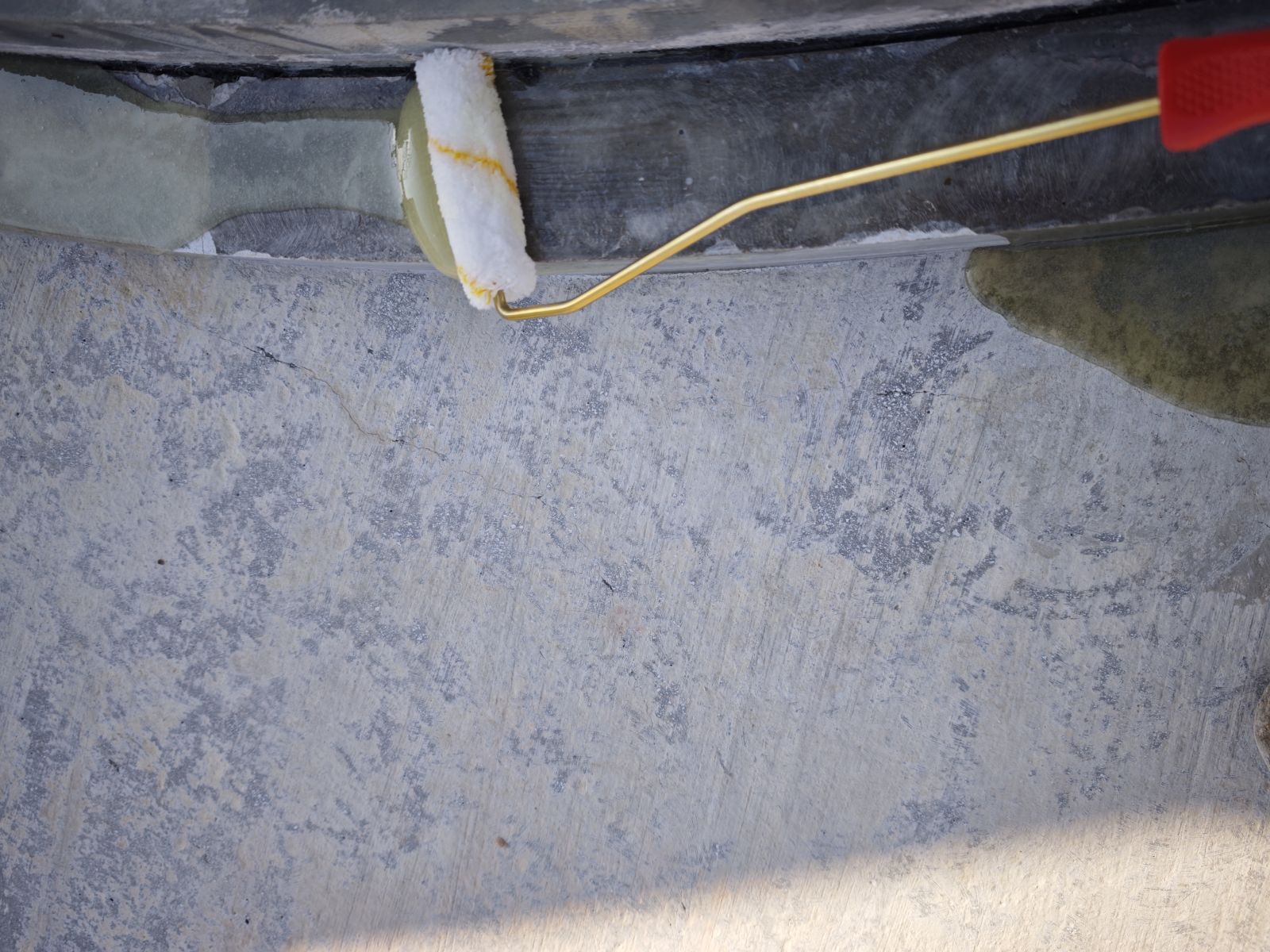
2. Epoxy Primer Application: Sealing the pores. A low-viscosity (highly fluid) epoxy primer is applied to the prepared surface with a roller. The primer is ensured to fully penetrate the capillary voids of the concrete.
-
Reasoning: By filling the capillary voids in the concrete, the primer blocks the emission of water vapor from below and establishes a chemical bridge (bonding barrier) between the main epoxy layer and the concrete. Without this layer, the integration of the main coating with the concrete remains weak.
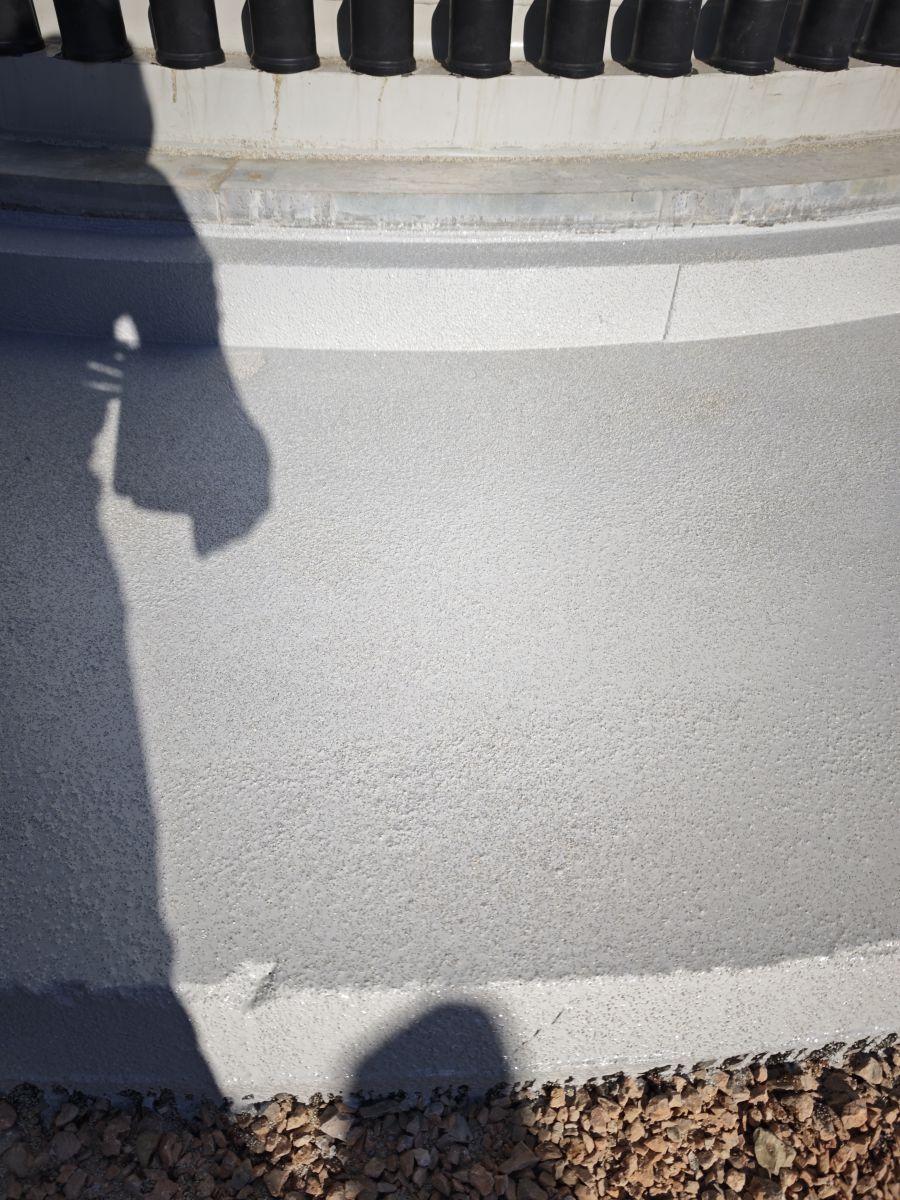
3. Epoxy Main Coat (Barrier) Application: Chemical and mechanical resistance layer. Once the primer has cured (tack-free when stepped on), a solvent-free or low-solvent epoxy main coat with high mechanical and chemical resistance is applied. This layer is typically applied in two coats to reach the desired micron thickness.
-
Reasoning: Epoxy is an excellent waterproofing material, and its mechanical strength is very high. It acts as the primary shield against hydraulic oils, greases, and industrial chemicals that may leak onto the pedestal from the upper parts of the turbine (nacelle region).
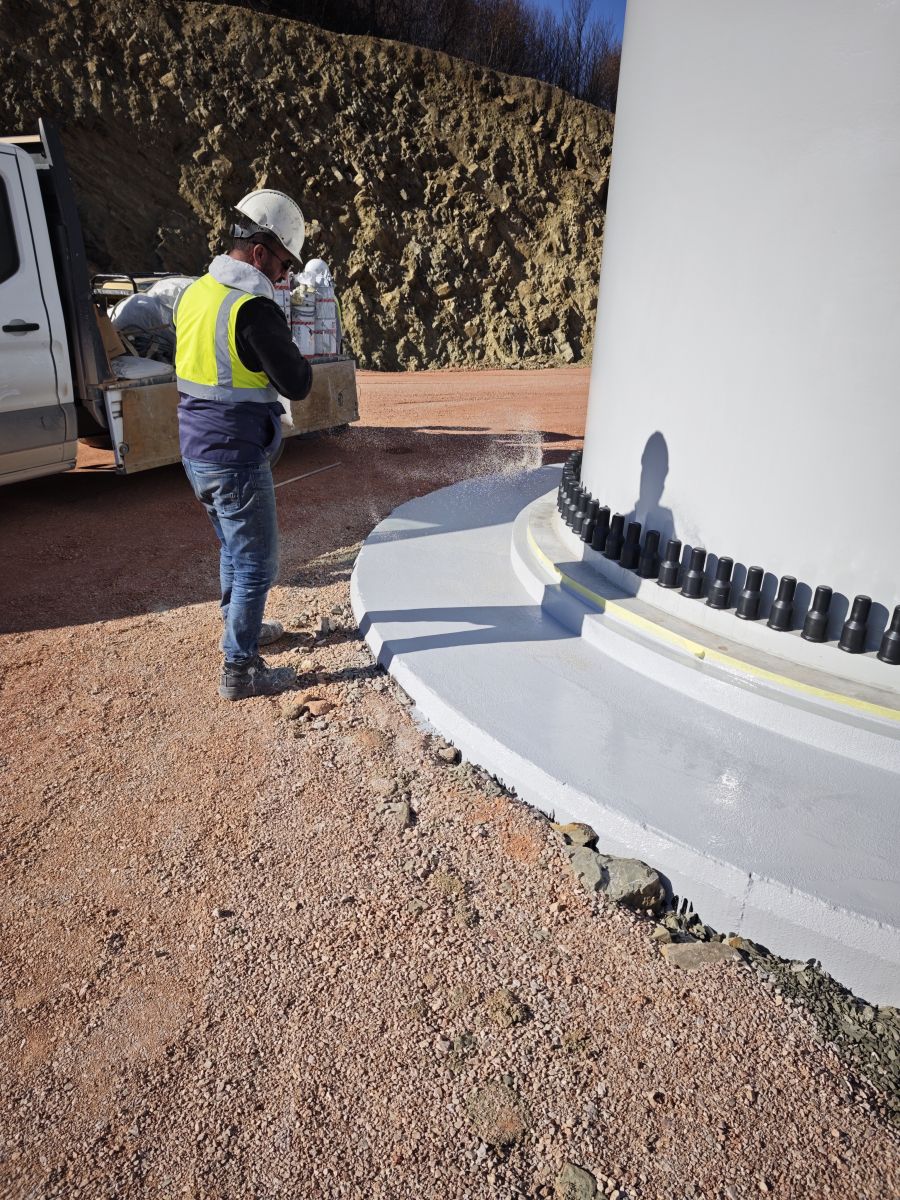
4. UV-Resistant Polyurethane Topcoat Application: Protection against solar radiation and expansion. Over the main epoxy coat, before full curing occurs (usually within 24 hours, before the epoxy's recoat window closes), an aliphatic polyurethane-based topcoat paint/coating is applied.
-
Reasoning: Although epoxy resins are excellent mechanically and chemically, they are not resistant to UV (ultraviolet) rays. Under sunlight, they quickly chalk, yellow, and eventually form micro-cracks, losing their insulating properties. The polyurethane topcoat:
-
Protects the epoxy from UV degradation.
-
Being more flexible compared to epoxy, it operates without cracking under the high temperature differentials in the external environment (thermal expansion and contraction).
-
The success of this system depends on the tensile strength, elongation at break, and viscosity values of the resins used—as specified in the technical specifications—working in harmony with the properties of the structural grout applied on-site (e.g., high-strength cement-free epoxy grouts).
Address: Fahrettin Altay Mh. 65/13 Sk. No:31/1 Karabağlar / İzmir
Phone: +90 232 278 10 50
info@atakkompozit.com
Copyright © 2024 | All rights reserved.
iz ajans