Wind Turbine Reinforced Concrete Foundation Repairs
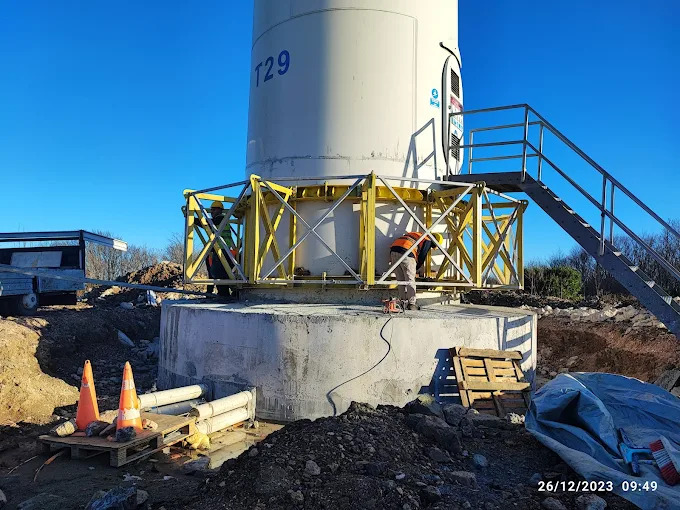
Wind turbine foundations must continuously dampen massively large dynamic wind loads, tower resonance, and fatigue effects. Cracks occurring over time, concrete fractures, or waterproofing vulnerabilities are not simple surface defects; they are structural issues that threaten the stability of the system.
Permanently resolving such damages with a professional engineering approach consists of consecutive stages whose order cannot be changed.
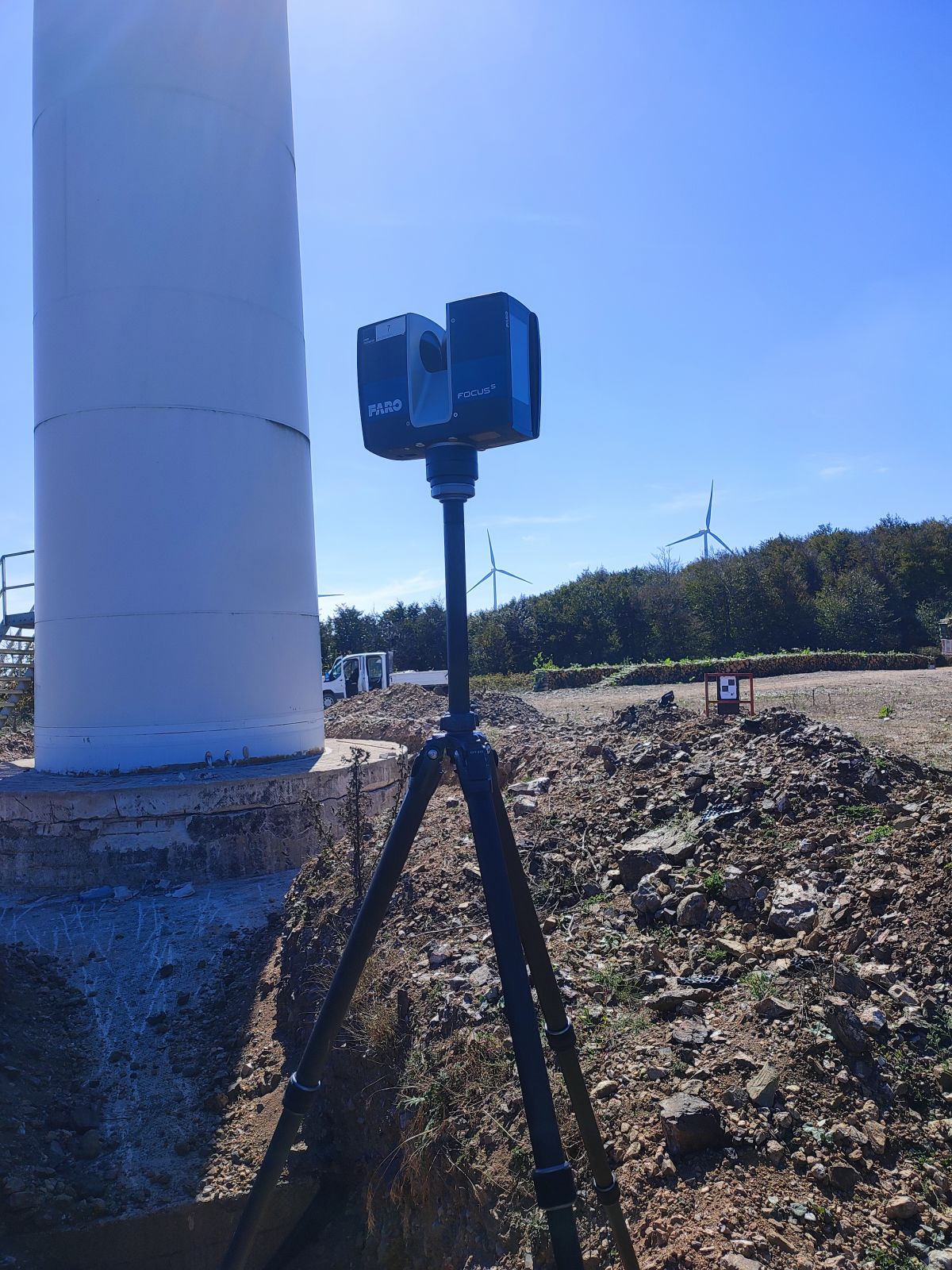
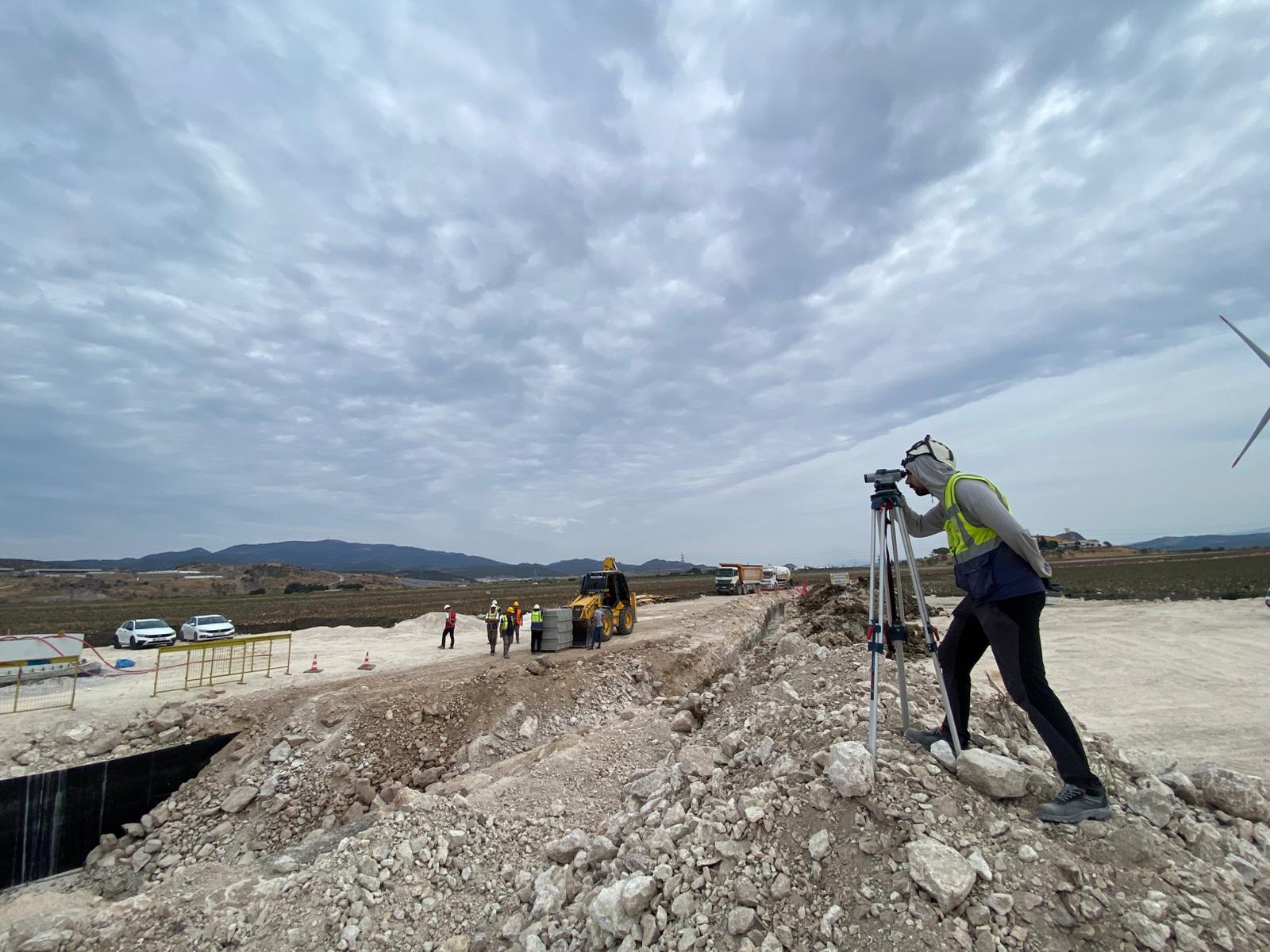
1. On-Site Inspection and Damage Assessment: Observational and instrumental data collection. The first step of the process is to clearly map the extent and boundaries of the damage on-site.
-
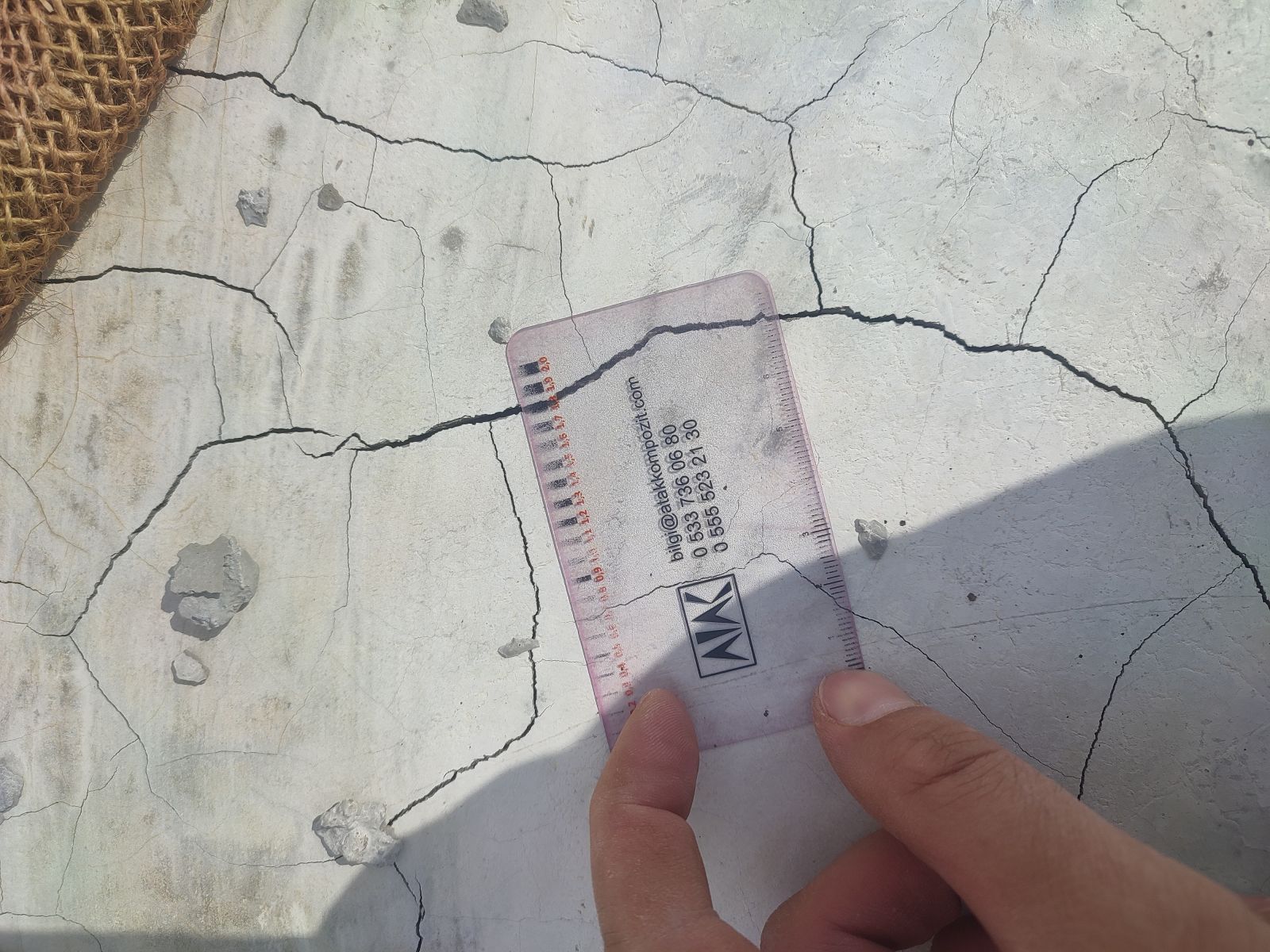
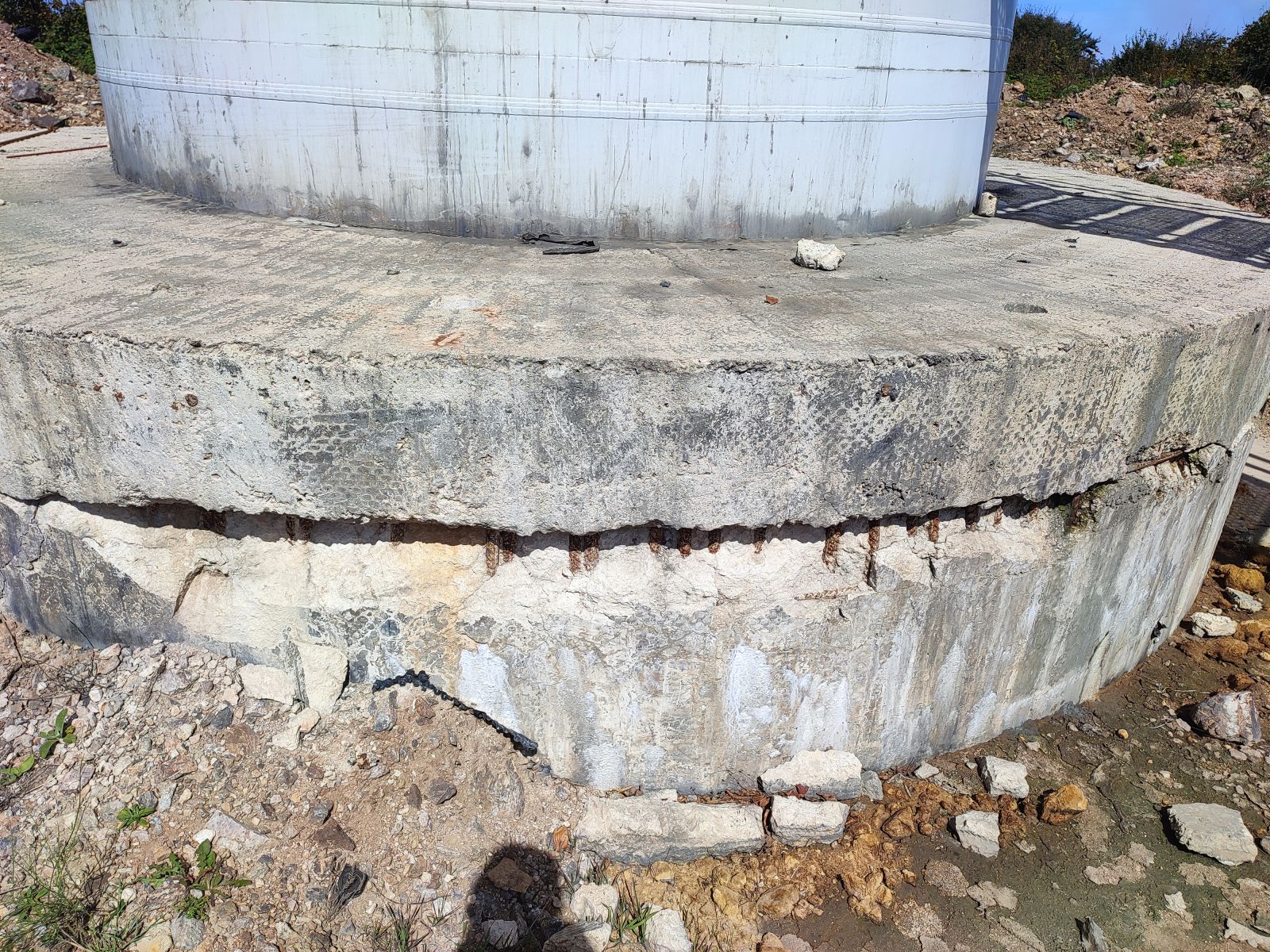
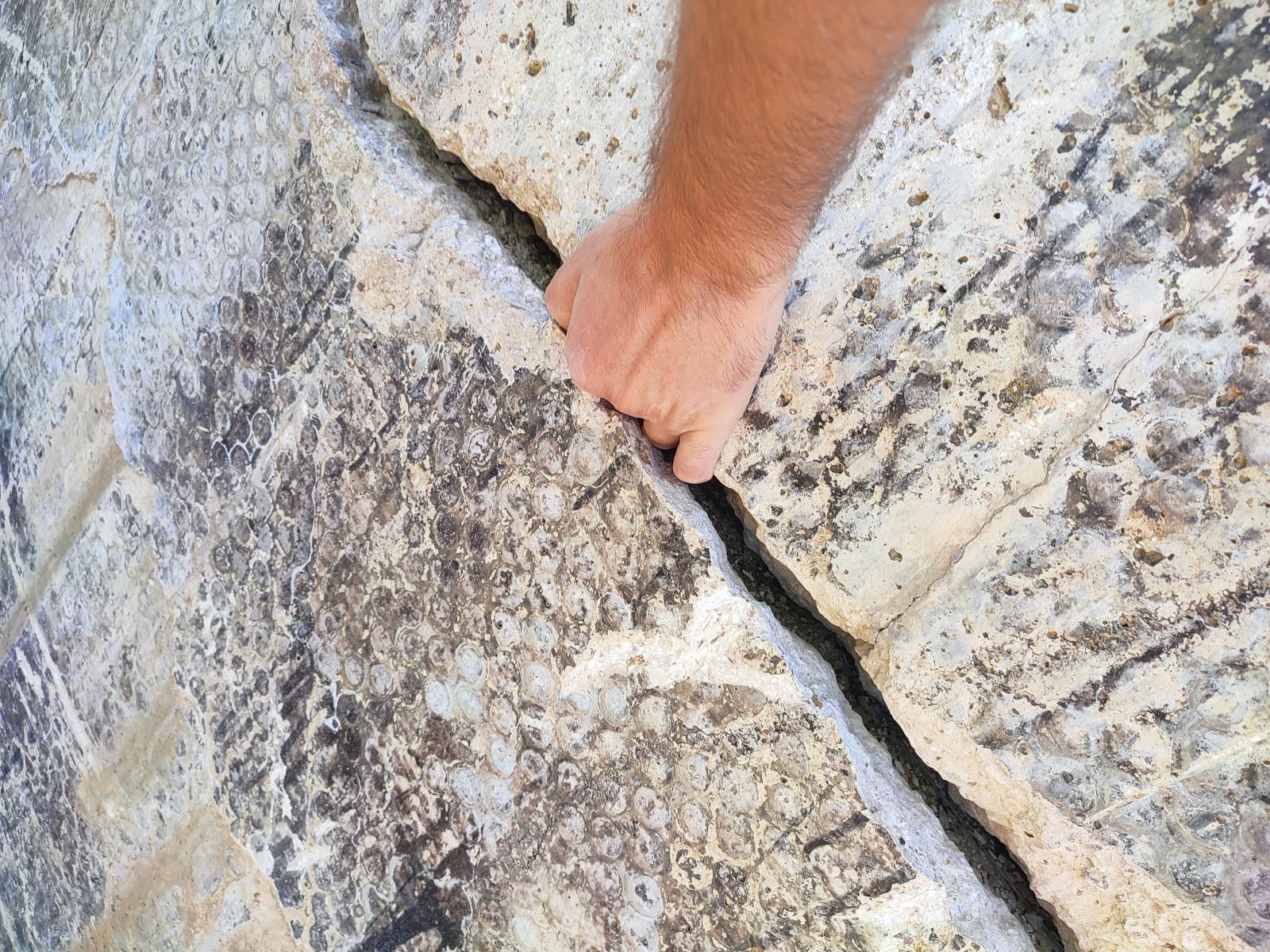
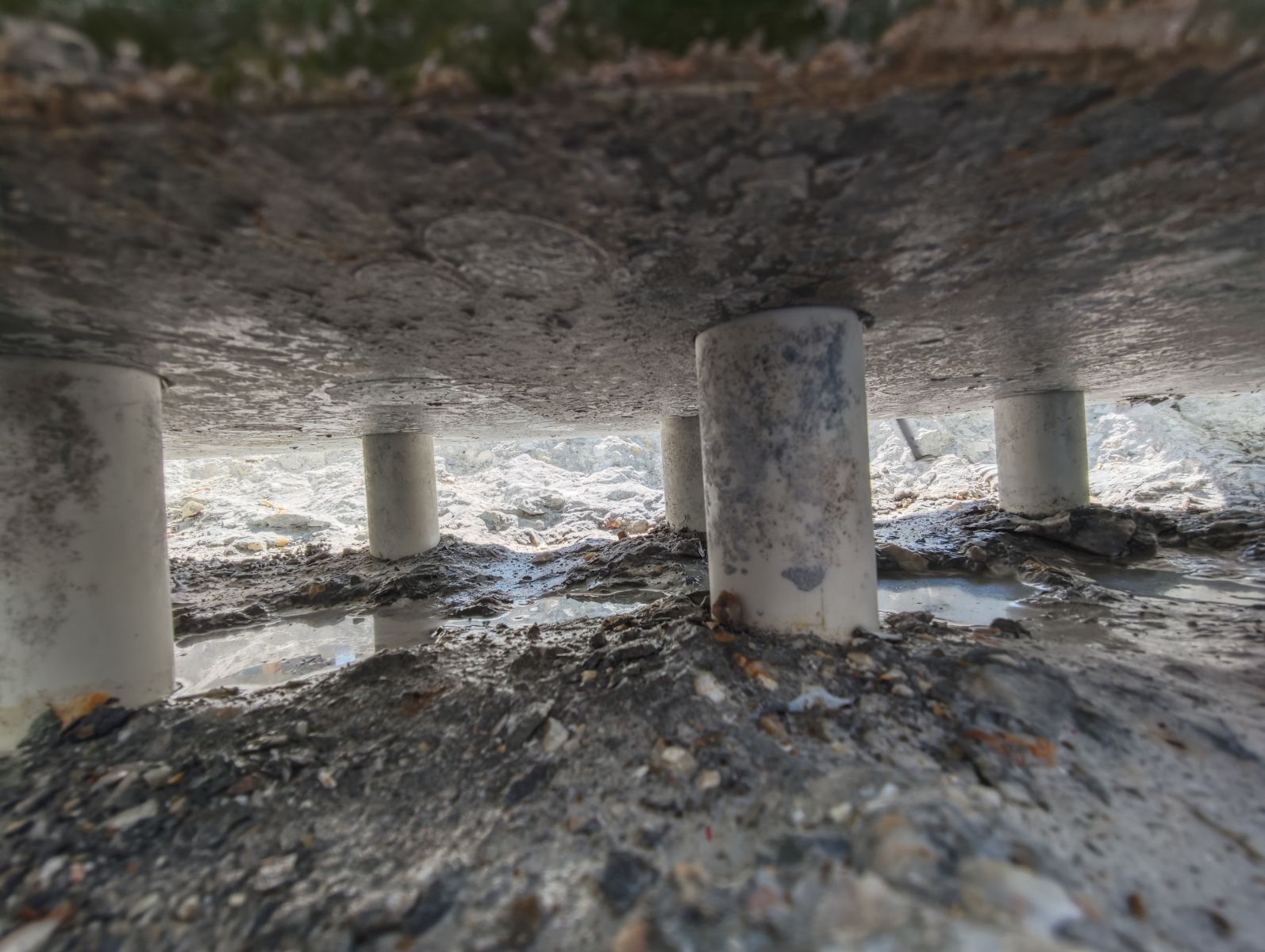
Visual Inspection: The direction of the cracks in the foundation concrete (flexural or shear crack?), traces of water or oil leaks, and whether there is spalling or voids in the grout mortar under the tower flange are examined.
-
Non-Destructive Testing (NDT): Micro-voids and delaminations within the concrete are detected using Ultrasonic Pulse Velocity (UPV) tests.
-
Operational Data Collection: If available, accelerometer and strain gauge data from Structural Health Monitoring (SHM) systems installed on the foundation are retrieved. This data shows how the foundation reacts while the turbine is operating and how much the damage opens under dynamic loads.
2. Understanding the Problem and Analysis: Determining the root cause. The actual source of the damage is found using the obtained field data.
-
Modeling and Simulation: The current damaged state is modeled in SAP2000 or similar finite element software, and stress concentrations and load transfer paths on the structure are simulated. How much the damage reduces the load-bearing capacity according to current earthquake codes or fatigue limit states is calculated.
-
Root Cause Isolation: Does the damage stem from a faulty initial pour (poor curing, high water/cement ratio), excessive fatigue loads, or a chemical attack (combination of oil/water leakage with freeze-thaw cycles)? Any repair done without finding the source of the problem will quickly fail again.
3. Establishing the Correct Solution Method: Material and methodology selection. Once the root cause is determined, an engineering design is created to return the structure to its original monolithic state or to make it stronger. Material Selection and the Writing of the Procedure are highly important issues.
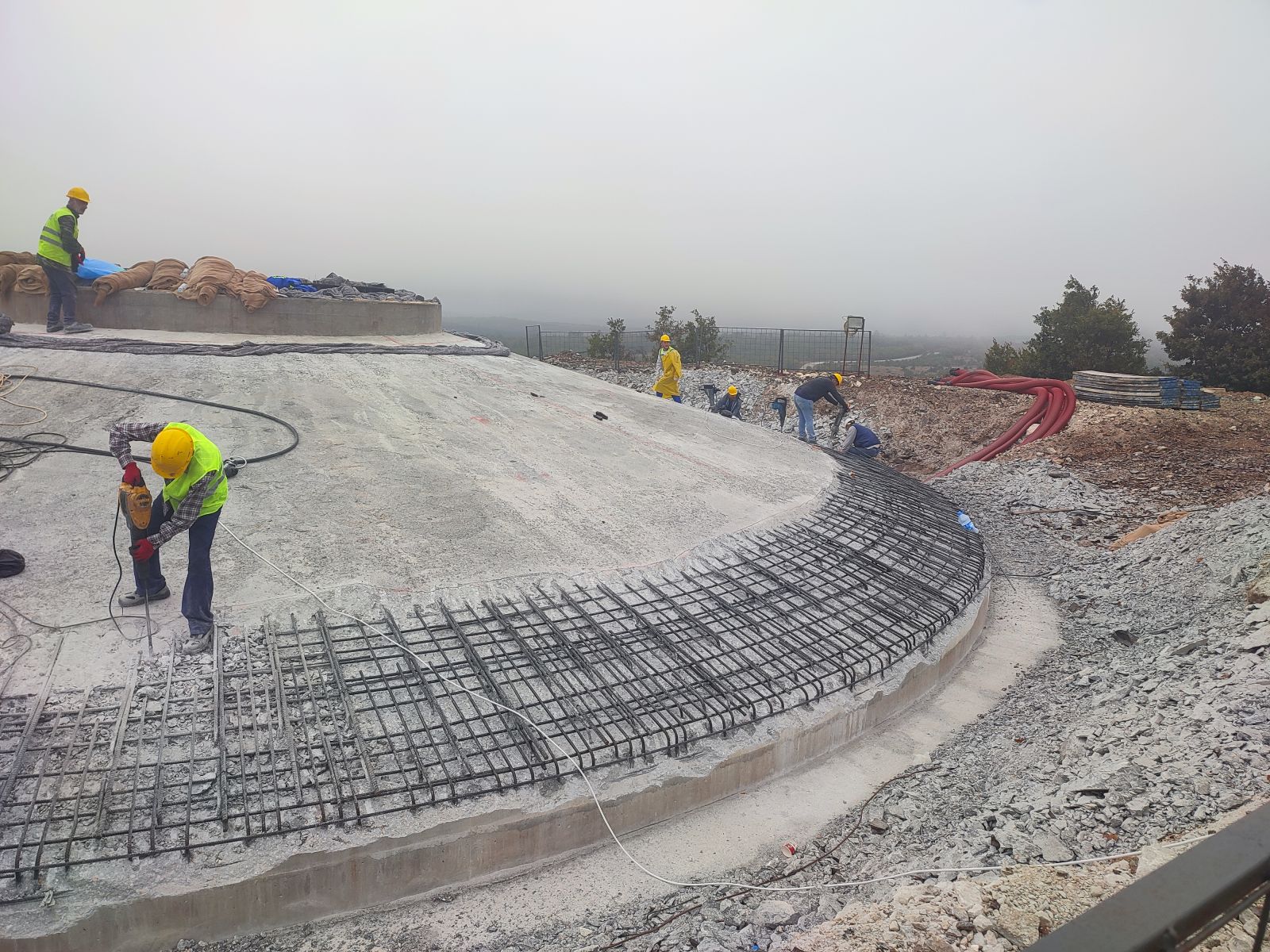
4. Execution of the Repair: Field application and quality assurance. Field application is initiated based on the approved design and material selections.
-
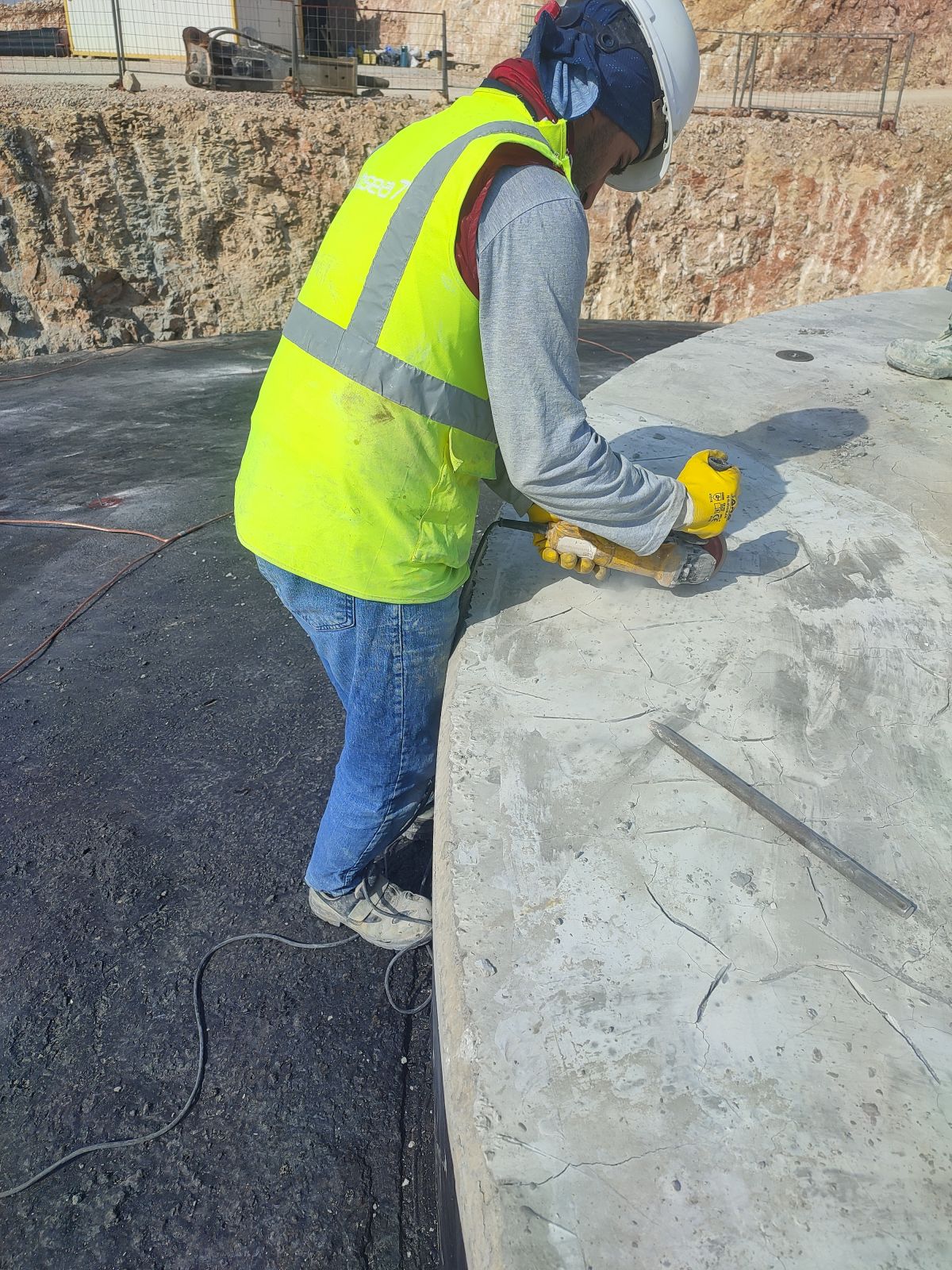
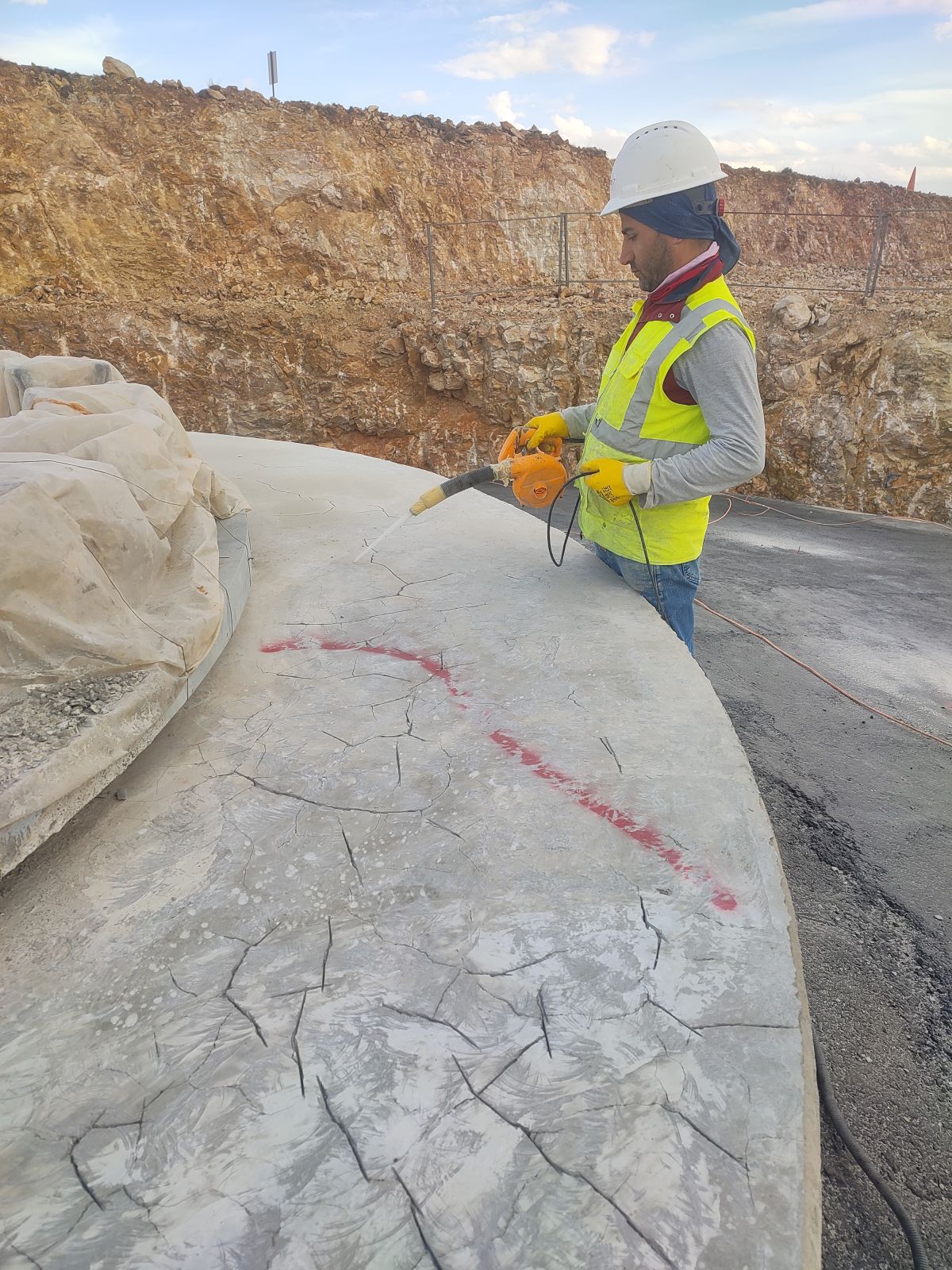
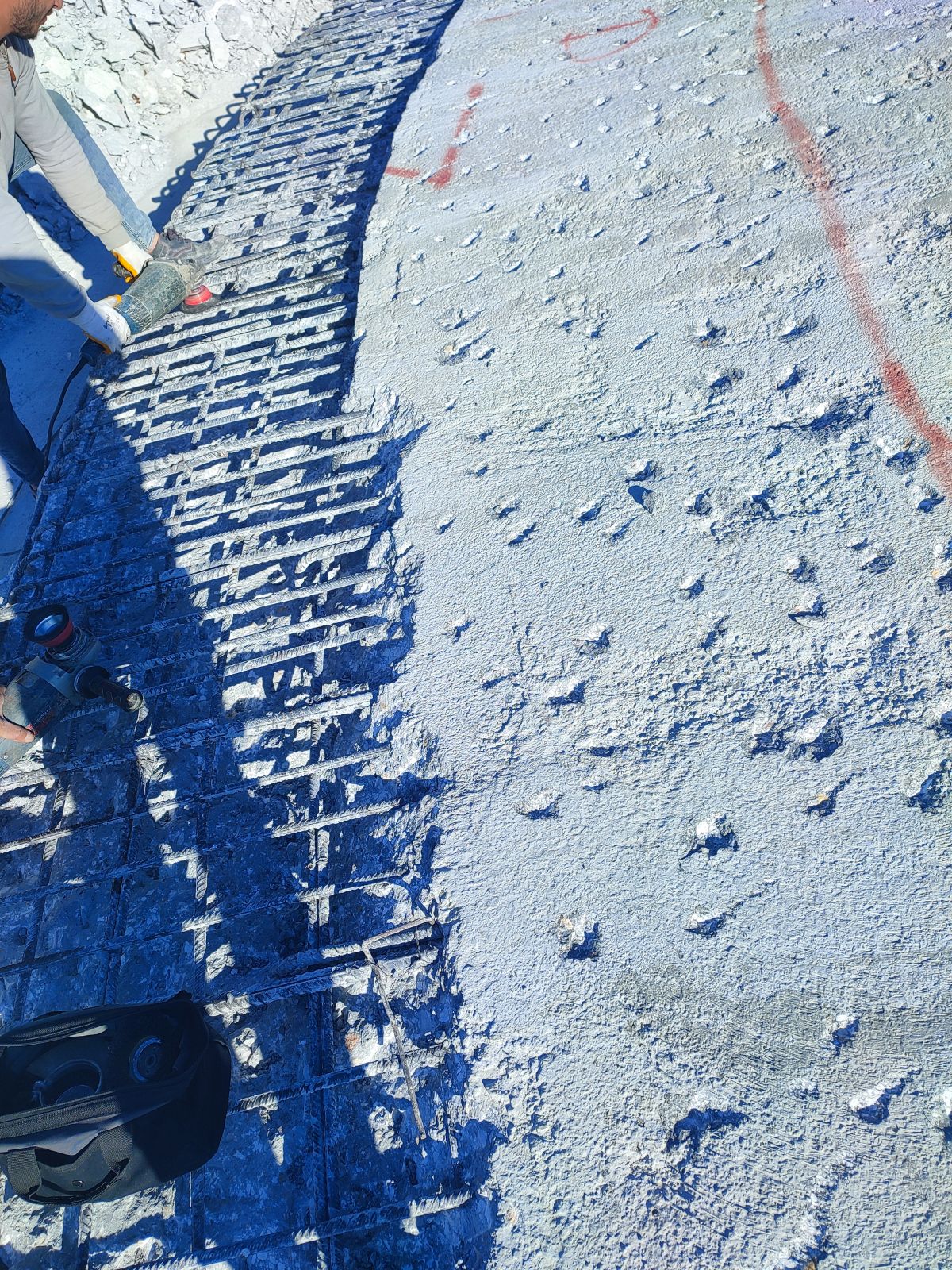
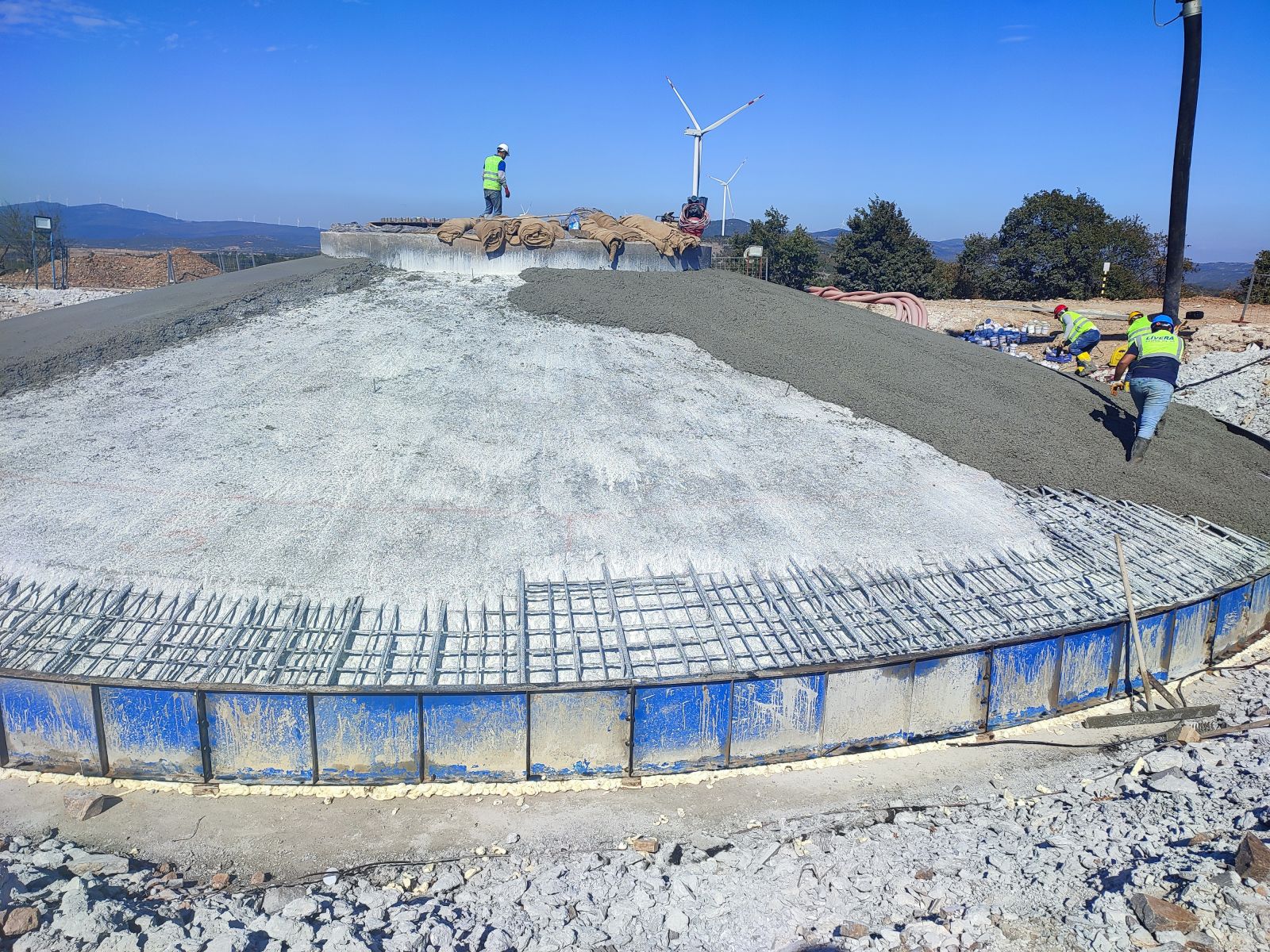
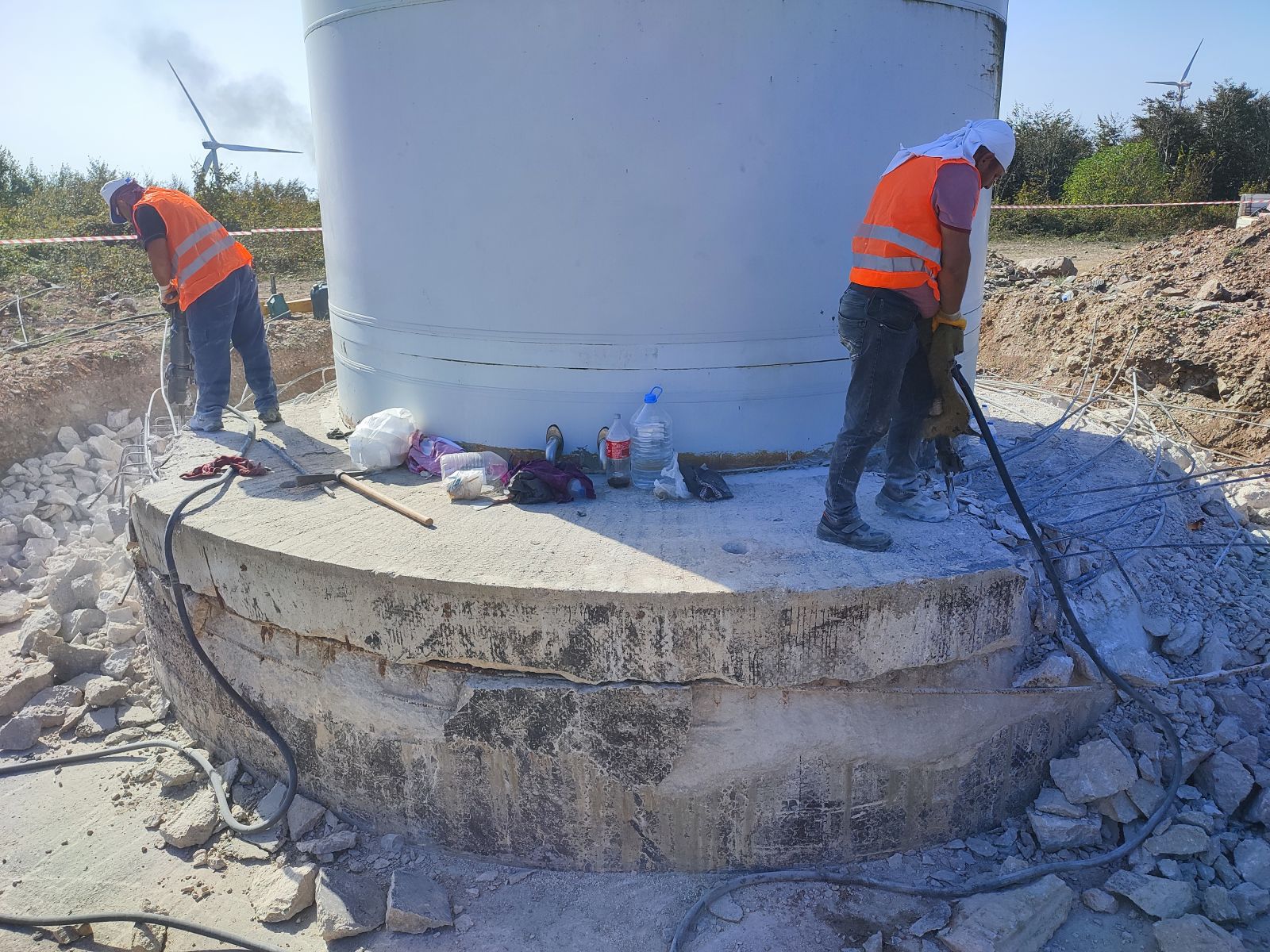
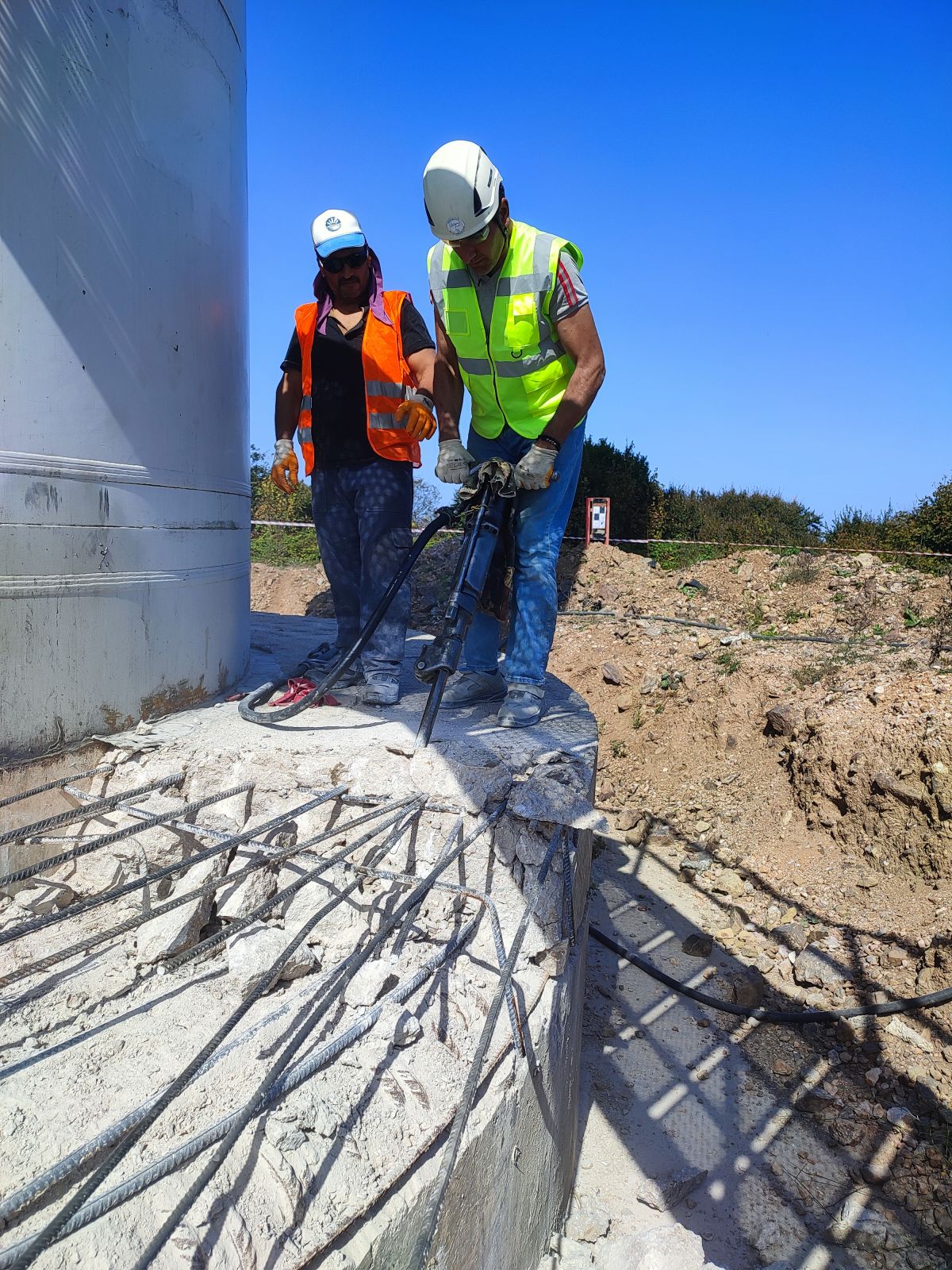
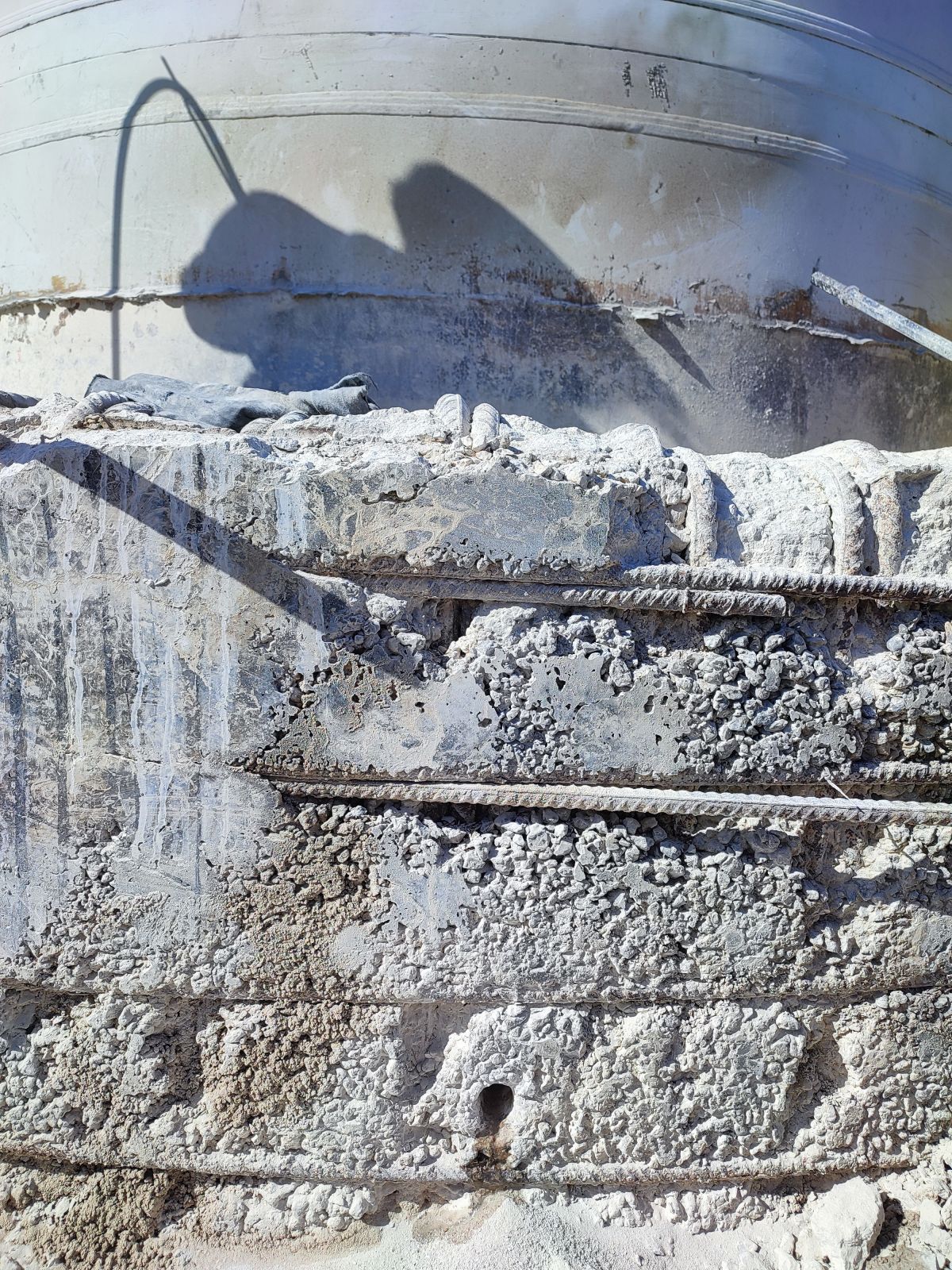
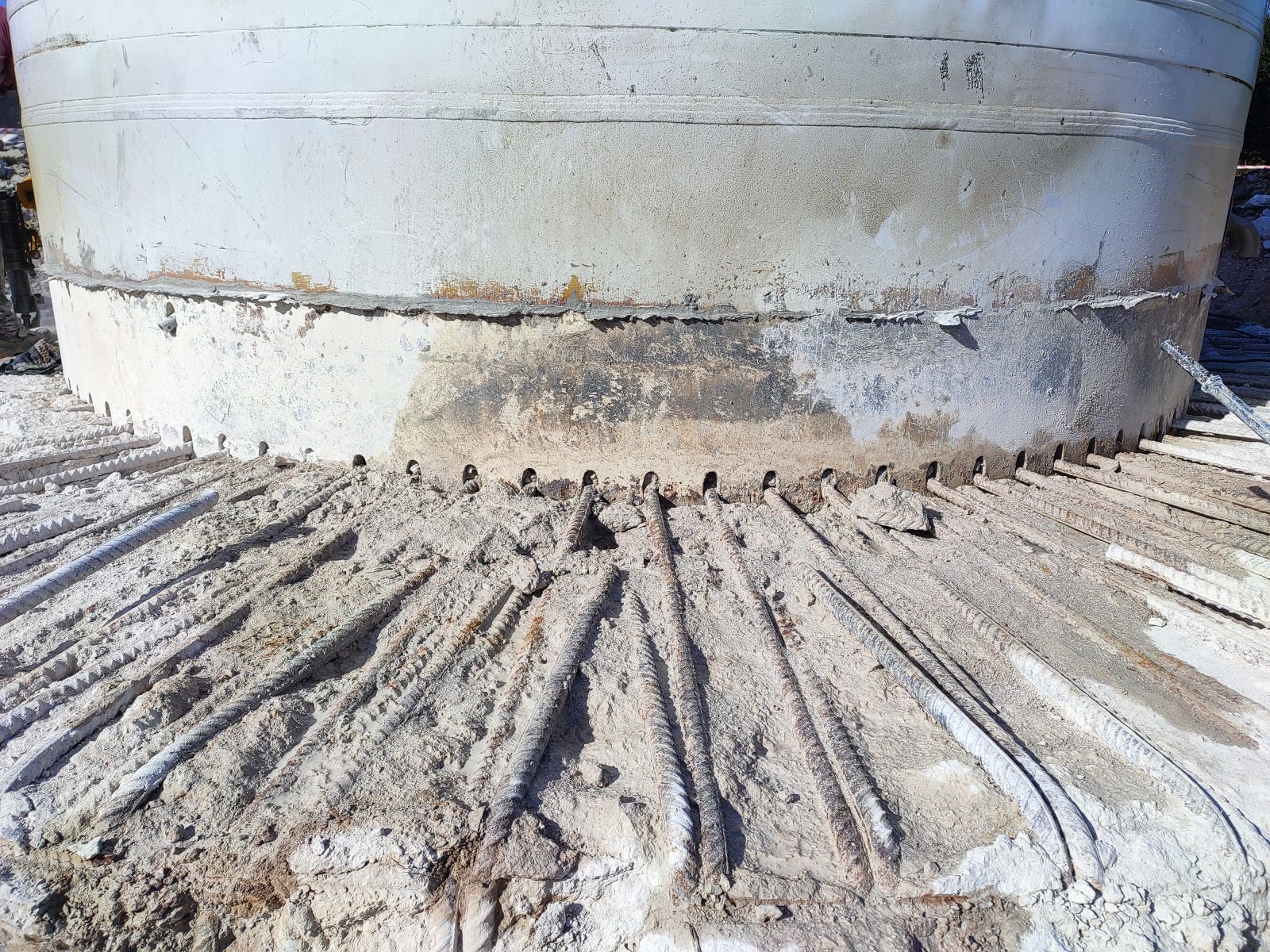
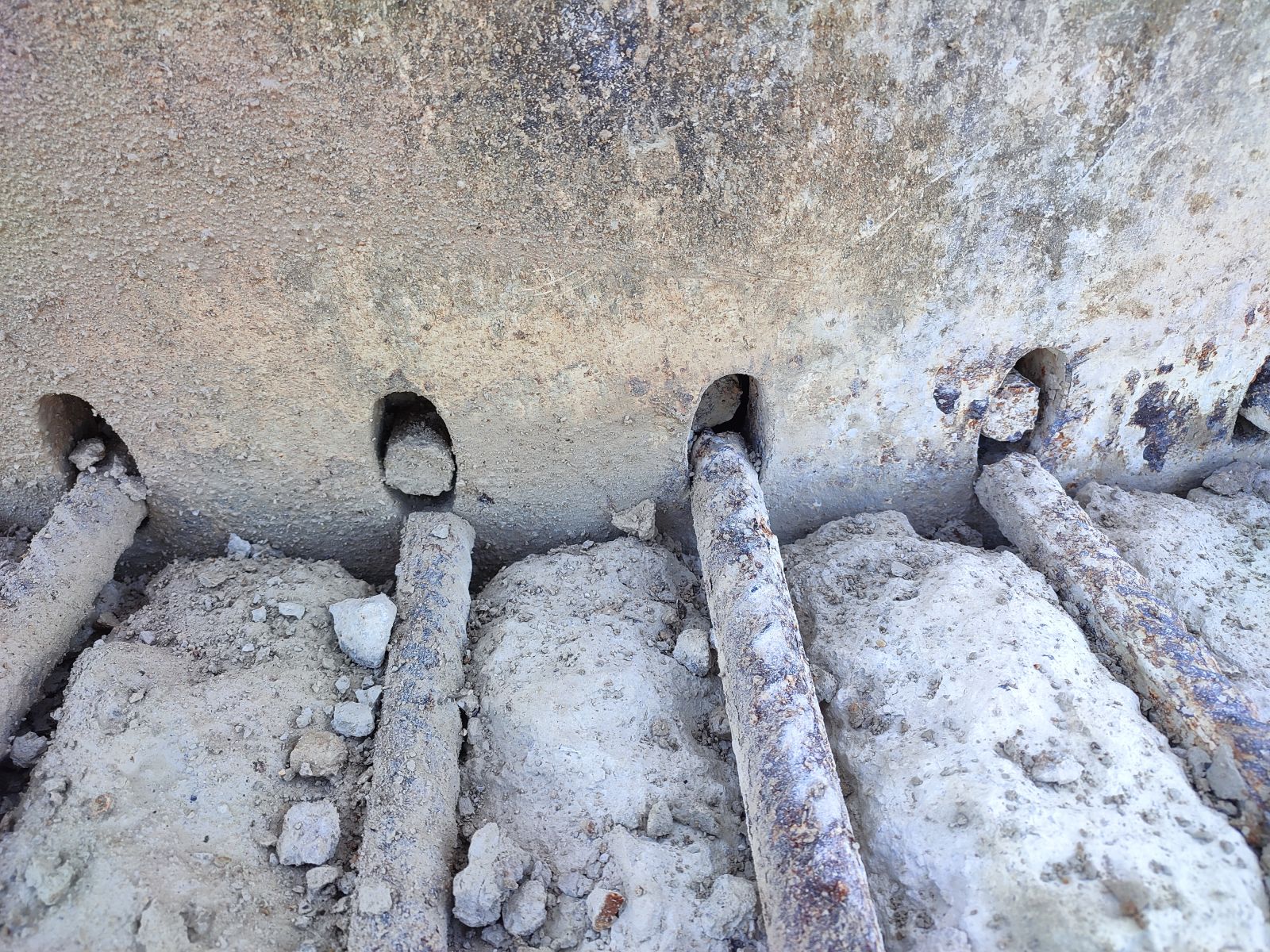
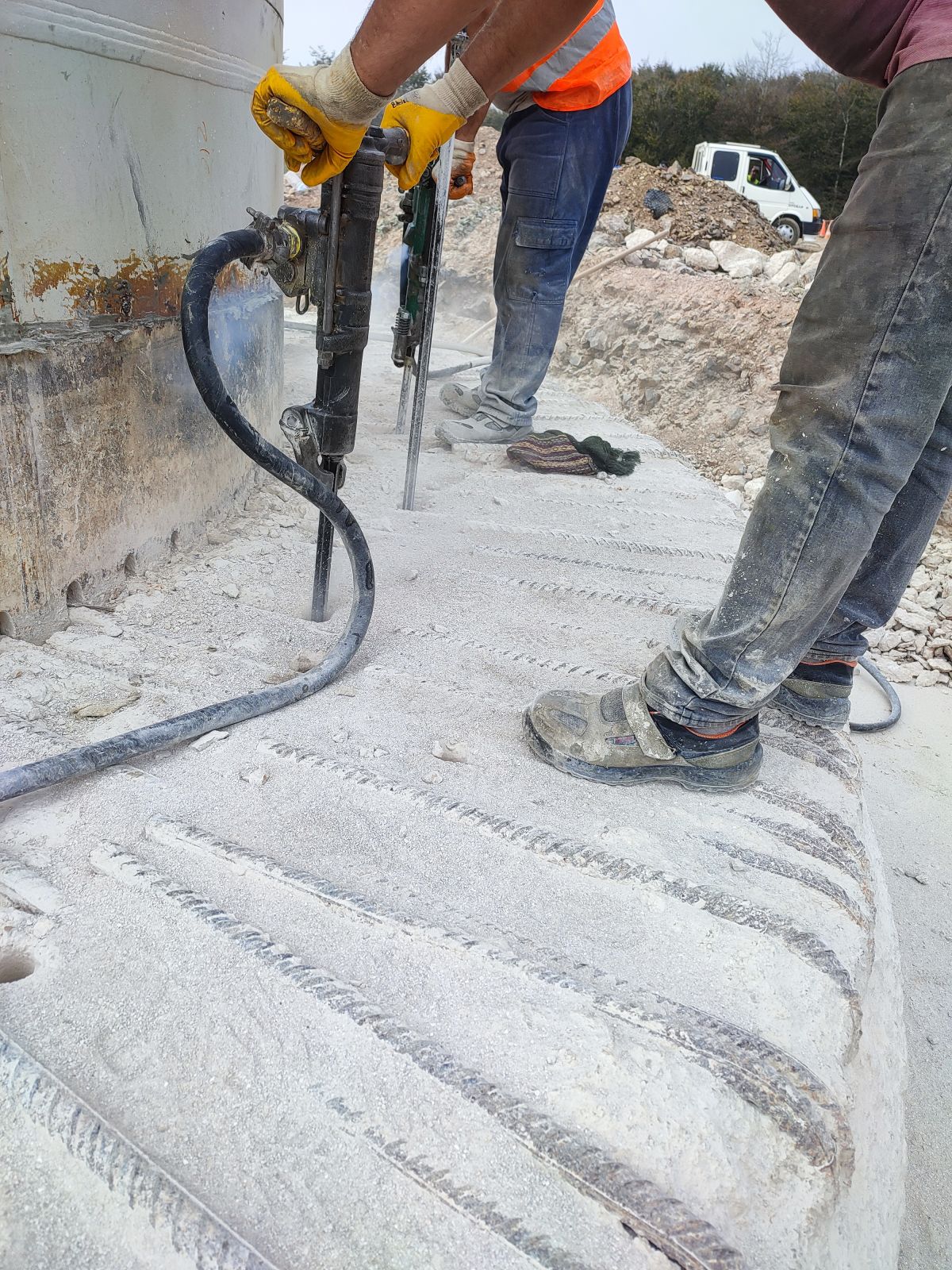
Mechanical Removal: Loose, crushed, or laitance-covered concrete layers are mechanically broken or shaved down until a rough and sound surface (until aggregates are exposed) is obtained.
-
Structural Injection: Cracks are sealed with epoxy and filled via bottom-up pressurized injection, ensuring the concrete acts as a single, monolithic piece.
-
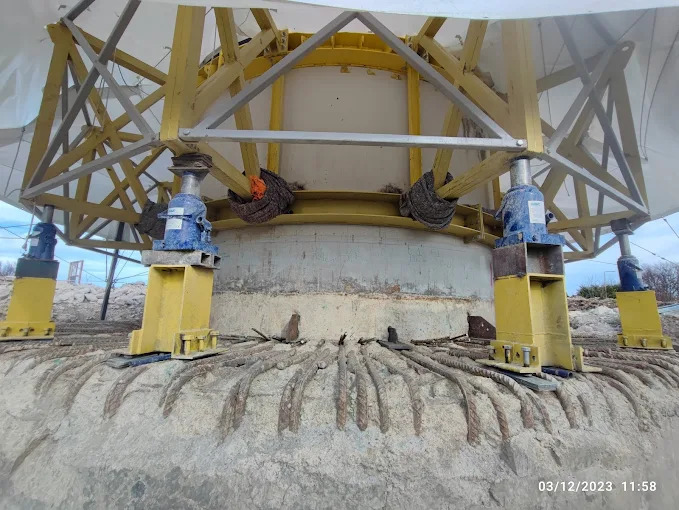
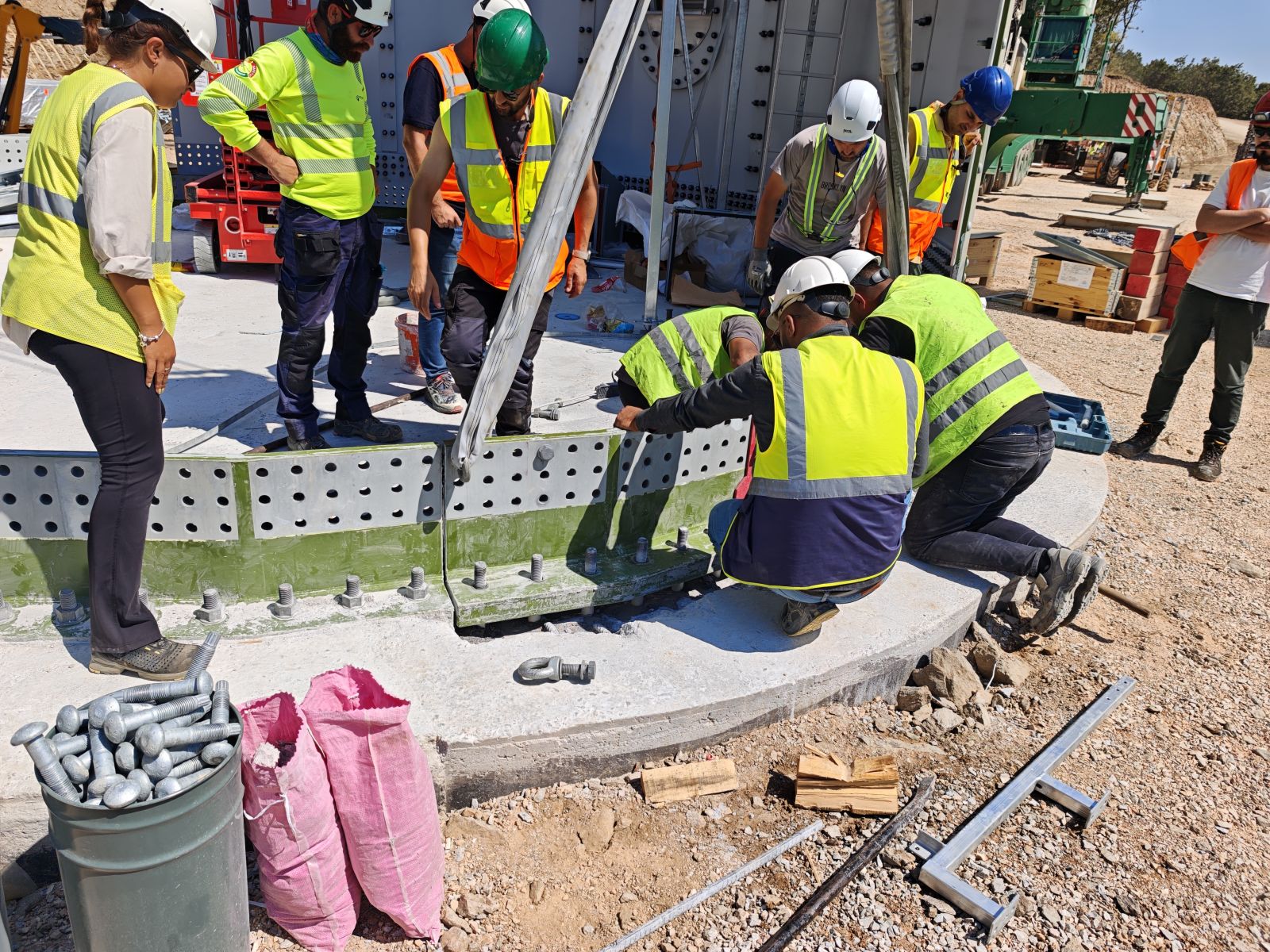
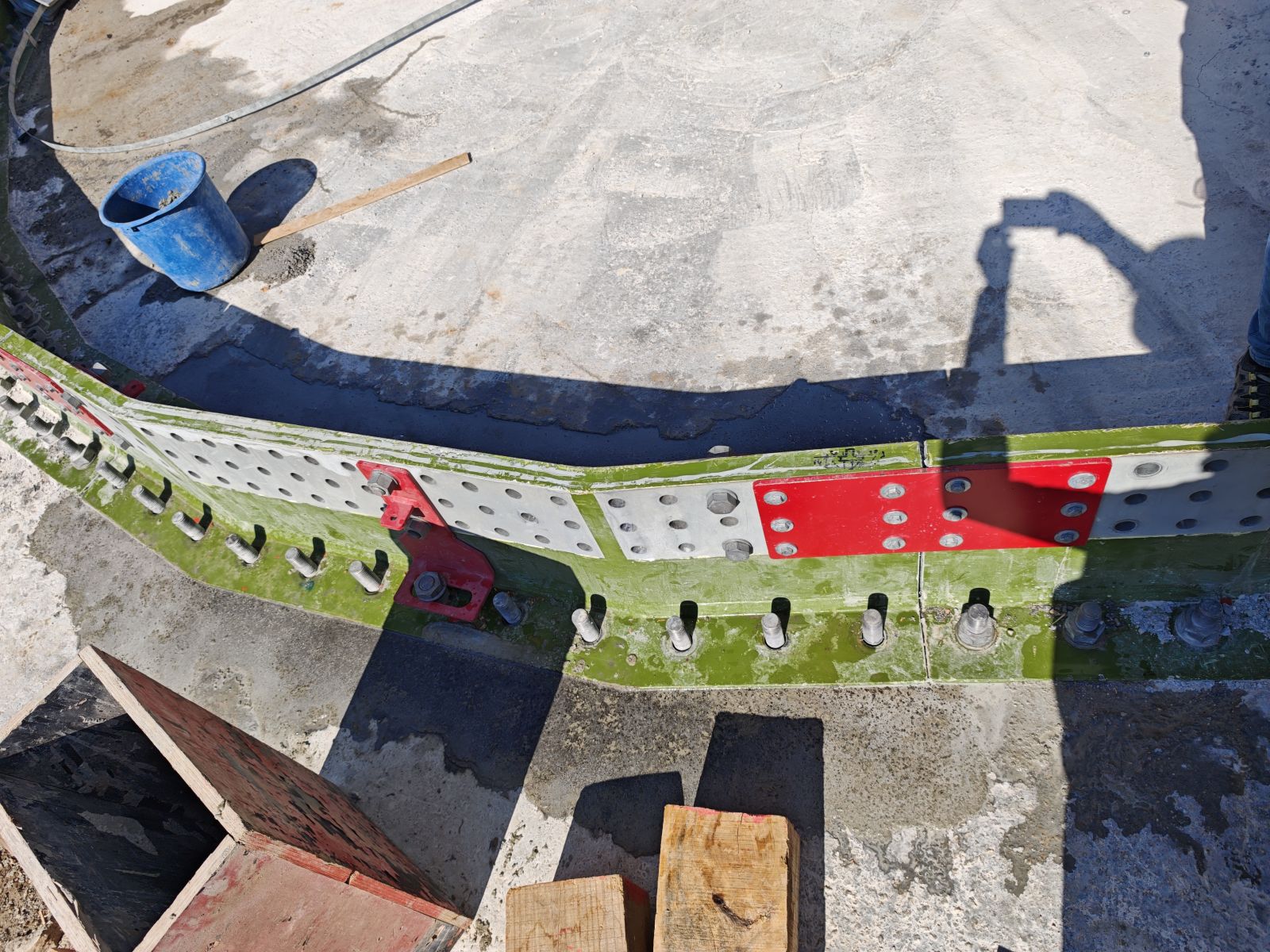
Grout Renewal: If there are voids or fractures under the flange, formworks (headbox) are installed, and a new grout application is performed on the principle of continuous, single-sided pouring.
-
Surface Protection: At the end of the process, the pedestal region is completely isolated from the external environment with UV-resistant polyurethane and epoxy systems.
5. Quality Control and Recommissioning: Performance verification. After the application is finished, the success of the repair is tested.
-
Monitoring: The turbine is brought back online. Via the structural health monitoring sensors, it is continuously monitored whether the rigidity of the foundation has been restored after the repair and whether the vibration damping capacity has reached the design values.
Address: Fahrettin Altay Mh. 65/13 Sk. No:31/1 Karabağlar / İzmir
Phone: +90 232 278 10 50
info@atakkompozit.com
Copyright © 2024 | All rights reserved.
iz ajans